
Why Long-Term Care Insurance Is Your Permission Slip to Spend
Bill Perkins' radical philosophy is simple: maximize life experiences and draw down your net worth to cross the finish line with exactly zero dollars left. But one terrifying question blocks the path for most people. What if I get sick? The fear of late-life medical emergencies causes us to oversave, sacrificing years of experiences to build a massive "just-in-case" safety net that often goes entirely untouched. One way to plan for that risk is Long-Term Care (LTC) Insurance.
1. Eliminate the "Self-Insuring" Trap
Many people set aside a large sum for possible care costs in their 80s. If that money goes unused, those were years of spending you gave up. An LTC policy can shift part of that risk to an insurance company. It helps pay for qualifying care up to the policy's benefit limits. Premiums on traditional policies can increase over time. On hybrid policies, whether the premium is guaranteed depends on the contract.
2. Your Permission Slip to Spend
LTC insurance is an offensive tool, not just a defensive one. Once part of your assisted-living and care costs are covered up to the policy's limits, you may feel freer to spend. No more hoarding cash out of fear. You're free to spend on meaningful experiences, family gifts, and fulfillment while you still have the health and vitality to enjoy them.
3. A Realistic Check on Long-Term Care Costs
A year in a semi-private nursing home costs about $114,975 nationally, and a private room about $129,575 (CareScout 2025 Cost of Care Survey, national medians). Your local costs may be higher or lower. Insurance can help pay for qualifying care up to the policy's benefit limits, so you can spend the rest on the life you have now.
The Die with Zero Life Curve, Protected
Executing a perfect life curve requires essential guardrails. LTC insurance can help limit how much a late-life care event takes from your savings, up to the policy's benefit limits. With that in place, you may be able to spend down with more confidence, converting every ounce of life energy into a life well-lived.
- Consider an LTC or hybrid life/LTC policy in your 50s or early 60s. Starting premiums are lower than if you wait until after 65.
- Think of the premium as the price of transferring part of a risk you would otherwise carry yourself.
- Review how much you are setting aside for care costs, and decide with your advisor how much you would rather spend now.
Action Step
Don't let the fear of a hypothetical future health crisis paralyze your present. Look into a long-term care insurance policy or hybrid life/LTC options in your late 50s or early 60s. A policy can't remove every risk, but it can help pay for qualifying care, so you can spend the rest on what matters to you, a life fully lived.
- LTC insurance helps pay for qualifying care up to the policy's benefit limits. Benefits, premiums, and guarantees vary by policy.
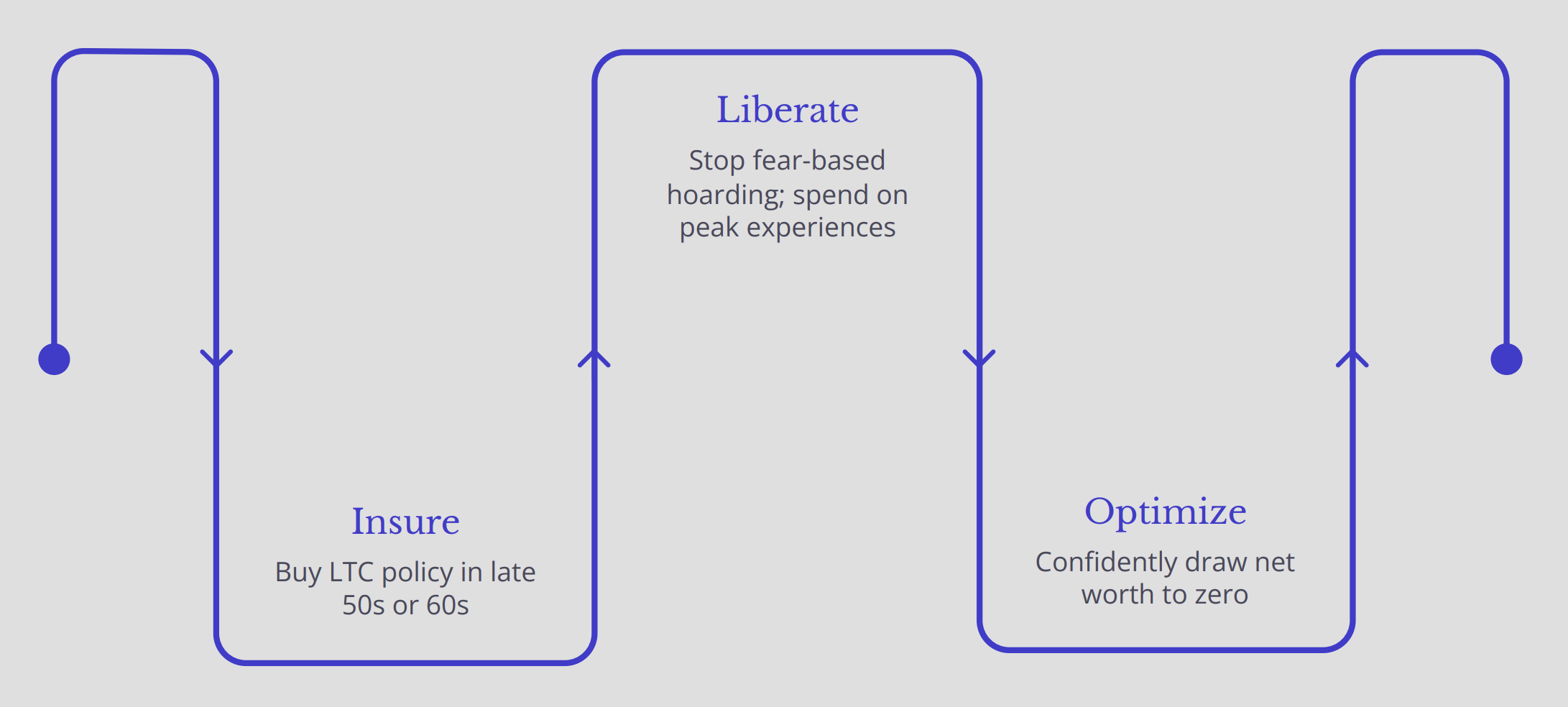
The Die with Zero idea is easier to follow when the risk of an expensive care event is planned for. LTC insurance can be one piece of that plan, helping pay for qualifying care up to the policy's benefit limits.